
California

Danger Dog

A bacon-wrapped late-night urban ritual born on the border and perfected on the sidewalks of California.

Flag of United StatesOrigin: Los Angeles, California, United States
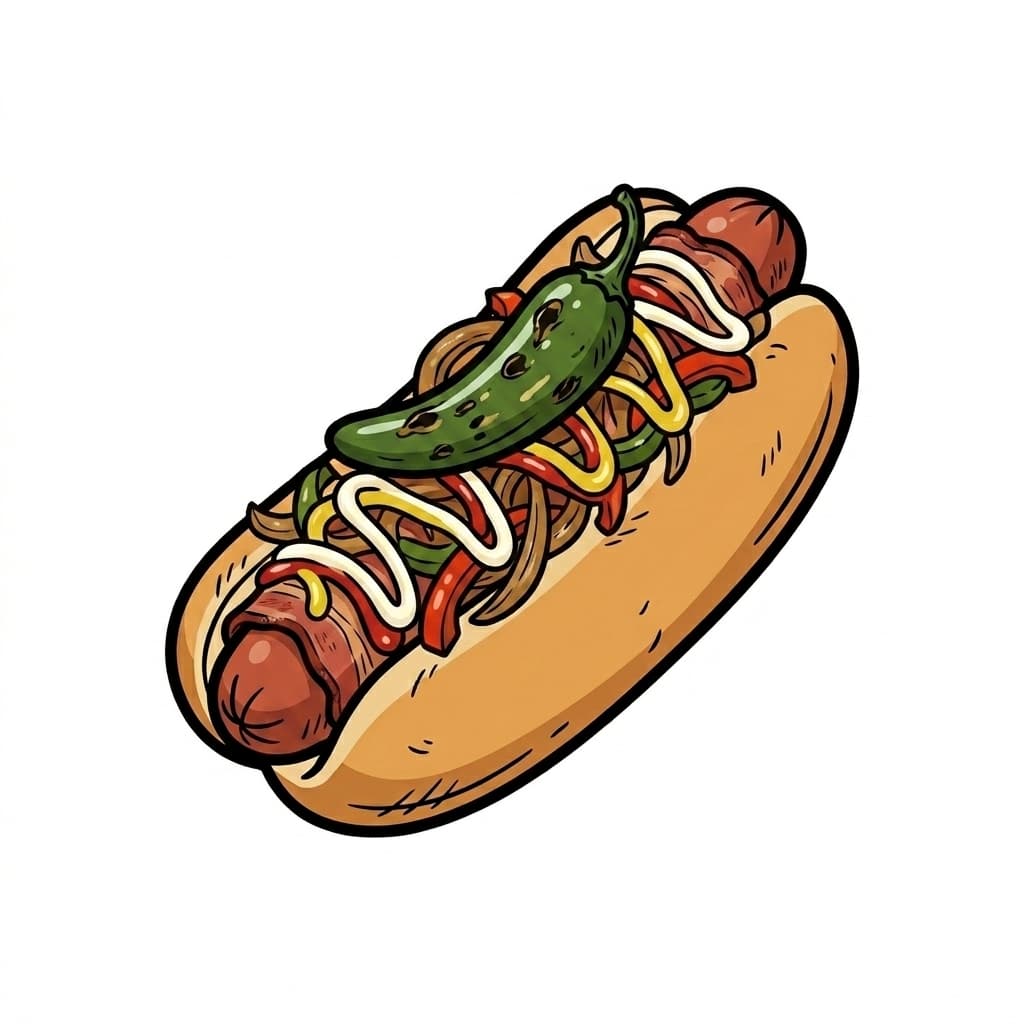
Danger Dog illustrated hot dog icon

Origin region: Los Angeles, California, United States

The anatomy

Vessel
Standard soft white hot dog bun
Sausage
Bacon-wrapped all-beef frank
Region
California

The Danger Dog is the undisputed champion of late-night sidewalk commerce. Originating as a border-town variation of the Sonoran Dog in Tijuana and Hermosillo, it migrated north and became the definitive post-concert, post-bar fuel in Los Angeles and San Francisco. A standard frank is wrapped in thin-cut bacon and fried on a flat-top griddle, then loaded with sweet caramelized onions, bell peppers, and a charred whole jalapeño. The entire construction is finished with a heavy, triple-threat zigzag of mayonnaise, mustard, and ketchup. This is street food at its most functional, designed to be purchased with cash and eaten standing up over a concrete curb.

Method

  1. 1Wrap a cold, raw hot dog tightly with a single slice of thin-cut bacon from end to end, securing the ends with wooden toothpicks.
  2. 2Place a flat-top griddle or heavy cast-iron skillet over medium heat.
  3. 3Cook the wrapped dog on the hot griddle, turning every three to four minutes to render the pork fat and crisp the bacon.
  4. 4Slide the cooked hot dog to the cooler outer edge of the griddle.
  5. 5Toss julienned onions, bell peppers, and a whole fresh jalapeño directly into the rendered bacon fat in the center of the griddle.
  6. 6Sauté the vegetables until the onions are caramelized and the jalapeño skin is blistered and charred.
  7. 7Place the split hot dog bun face-down on the griddle for 30 seconds to warm and absorb the residual bacon grease.
  8. 8Remove the toothpicks from the hot dog and place the sausage into the warmed bun.
  9. 9Pile the caramelized onions and bell peppers directly over the hot dog.
  10. 10Drizzle mayonnaise, ketchup, and mustard across the toppings in a tight zigzag pattern.
  11. 11Garnish with the blistered whole jalapeño on top or serve it on the side.

Sources

  • Danger Dog

    Supports the regional history, migration to California, use of basic white buns, and the origin of the danger moniker.

  • Danger Dog

    Confirms the Hermosillo origin in the 1980s, the role of dogueros, and the traditional bacon-wrapped preparation.

  • LA Danger Dog

    Details the classic late-night bar context, key toppings, and the cast-iron griddle cooking method.

  • Bacon Wrapped Hot Dogs

    Documents the sensory experience of street carts, Sterno setups, and stadium-adjacent vending culture.

  • LA-Style Danger Dogs

    Discusses the transition from bolillo rolls to cheap commercial buns and the toothpick pinning technique.

  • Mexican Hot Dogs Recipe (L.A. Street Dog)

    Provides specific griddle timing guidelines and details on cooking the toppings directly in the rendered bacon fat.

Controversies

Municipal health departments claim cracking down on unlicensed bacon-wrapped hot dog carts is a necessary measure to prevent foodborne illness.

Our take: The real danger in a Danger Dog is not the food safety, it is the stadium concession cartels trying to eliminate five-dollar competition. City officials claiming they are protecting the public from rancid meat just reeks of protecting corporate stadium margins.

Los Angeles County health codes require mobile hot dog vendors to only steam or boil sausages, outlawing open-flame griddles.

Our take: Mandating that a bacon-wrapped hot dog be boiled is a bureaucratic tragedy. Boiling bacon is a culinary crime, and enforcing it effectively outlaws the entire street-food culture of Southern California.

Purists argue that the California Danger Dog is a simplified, inferior imitation of the authentic Sonoran Hot Dog.

Our take: The Danger Dog is not a lazy Sonoran Dog. It is a streamlined machine built for a different environment. Swapping a delicate bolillo roll for a sturdy commercial bun makes sense when you are eating on a sidewalk at two in the morning.