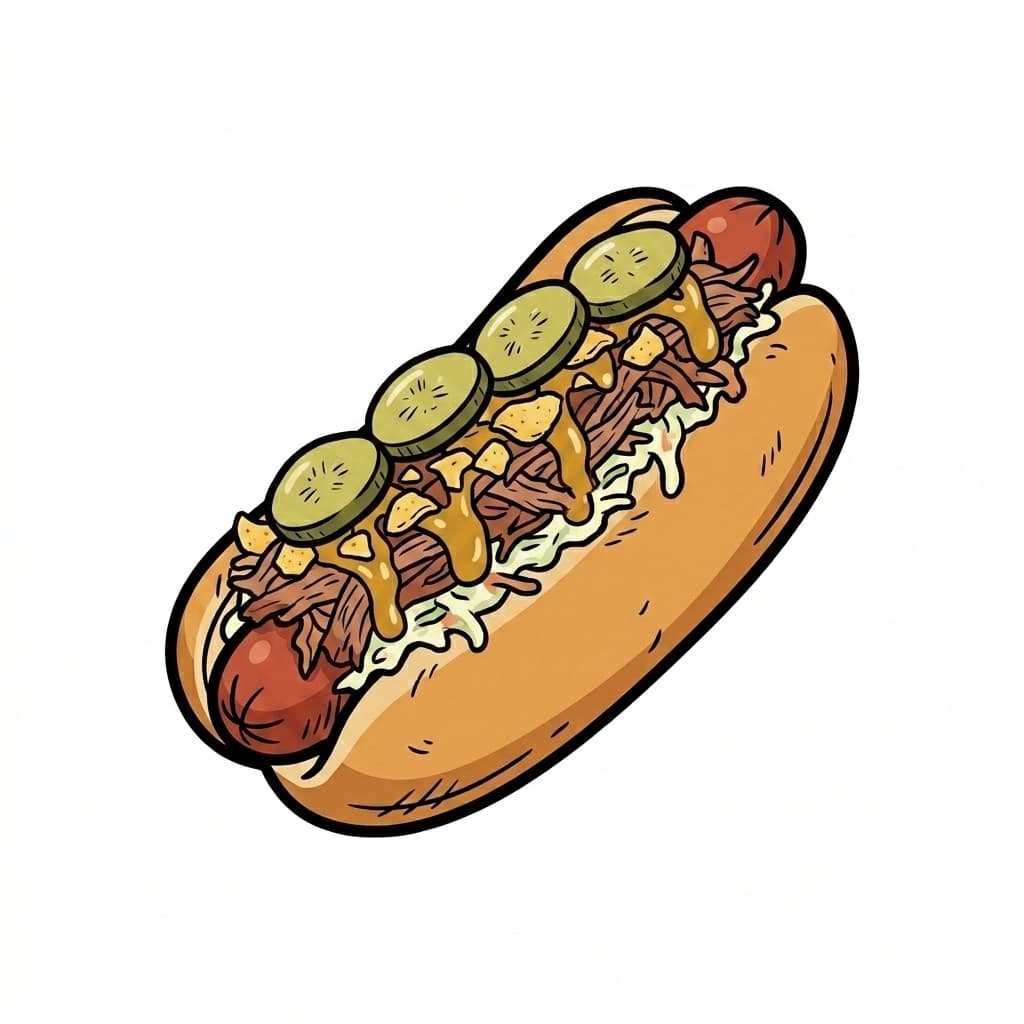
Dixie Dog

A heavy combination of standard all-beef frankfurter, slow-cooked smoked pulled pork, and mustard barbecue sauce.

Flag of United StatesOrigin: Atlanta, United States
Dixie Dog illustrated hot dog icon

The anatomy

Vessel
Split-top hot dog bun
Sausage
Ballpark all-beef frank
Region
Not set

The Dixie Dog is the result of merging a standard hotdog with Southern slow-cooked barbecue. It exists in two formats: a simple West Virginia chili-slaw combination and a complex Atlanta stadium variant. The Atlanta version flash-fries the sausage to blister the casing before piling it high with pork shoulder, mustard sauce, and potato chips. The result is structurally heavy, messy, and best approached with a stack of napkins.

Method

  1. 1Heat cooking oil in a deep pot to 350 degrees Fahrenheit or 175 degrees Celsius.
  2. 2Deep-fry the ballpark frank for 3 to 4 minutes until the casing blisters and the sausage floats.
  3. 3Drain the frank briefly on paper towels and place it into a fresh split-top bun.
  4. 4Mound 3 ounces of warm smoked pulled pork directly over the hotdog.
  5. 5Drizzle 1 tablespoon of mustard-based Carolina barbecue sauce over the pulled pork.
  6. 6Spoon a half-ounce of cool, creamy southern coleslaw over the sauced pork.
  7. 7Arrange 4 garlic pickle slices along the top.
  8. 8Scatter crushed kettle-cooked potato chips over the dog immediately before serving to preserve the crunch.

Sources

Controversies

The combination of chili and coleslaw on a hotdog was invented in 1933 at Stewart's Root Beer Stand in Huntington.

Our take: Historians found advertisements from 1922 for the Stopette Drive-In near Charleston promoting a new dog with slaw. Huntington can claim the branding, but Charleston had the cabbage first.

Coleslaw is a mandatory hotdog topping throughout West Virginia.

Our take: The state is divided by a strict geographical boundary known as the Slaw Line. Northern counties operate a firm anti-slaw resistance, limiting toppings to chili, mustard, and onions. Respect the local border.

The name Dixie Dog is a harmless regional descriptor.

Our take: The word Dixie carries historic baggage that makes people uncomfortable, which is why modern menus are quietly shifting their language. The name is dated, but the combination of pork and potato chips works.