West Virginia

Slaw Dog

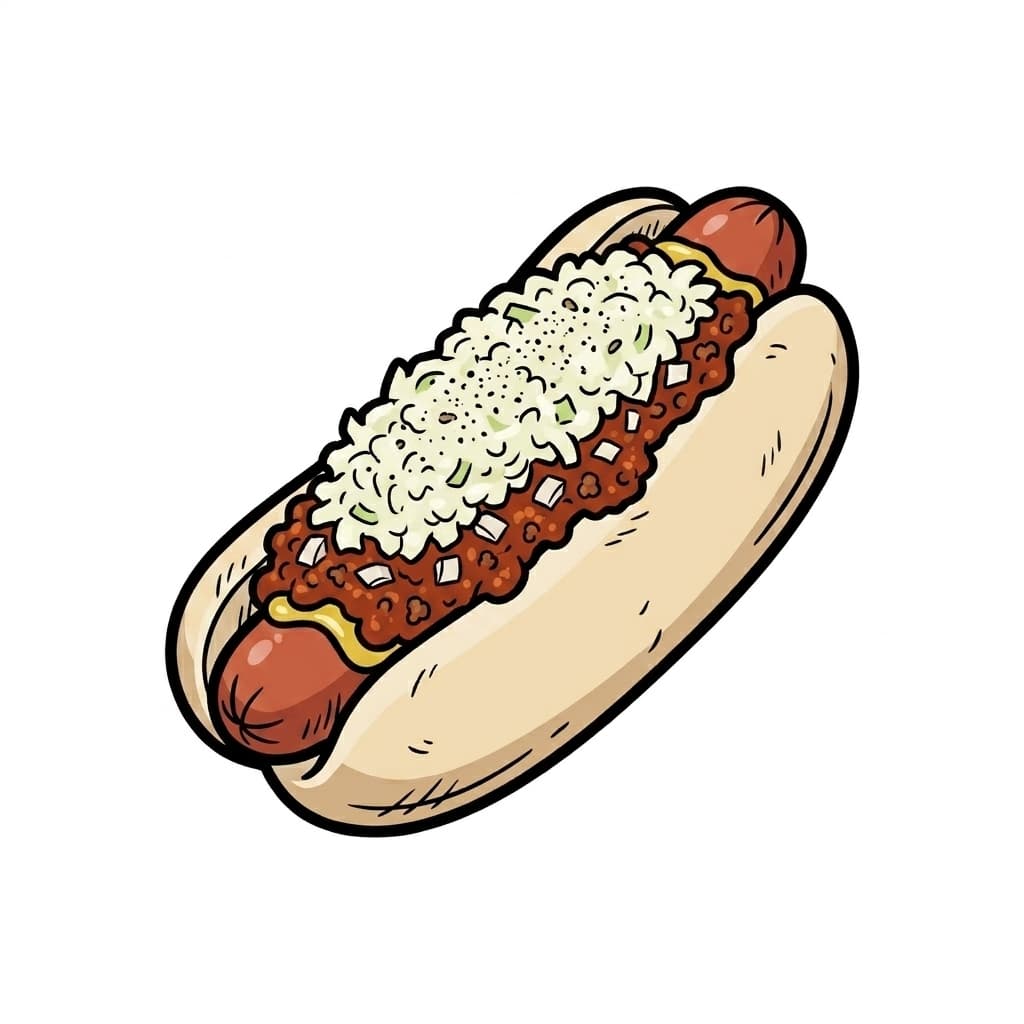
A warm, chili-blanketed frank topped with cold, finely minced coleslaw.

Flag of United StatesOrigin: West Virginia, United States
Slaw Dog illustrated hot dog icon

Origin region: West Virginia, United States

The anatomy

Vessel
Steamed white hot dog bun
Sausage
All-beef frank with a natural casing
Region
West Virginia

The Slaw Dog is a masterclass in thermal and textural friction. Originating in West Virginia during the 1920s, this staple of the American South pairs a hot, savory, beanless meat sauce with a heavy crown of sweet, ice-cold coleslaw. The contrast is deliberate, providing a cooling crunch that cuts through the rich, spicy ground beef. To make it correctly, the coleslaw must be finely minced, not shredded, so it sits cleanly on the dog rather than sliding off in long, awkward strands.

Method

  1. 1Pulse half a head of green cabbage in a food processor until finely minced like rice.
  2. 2Whisk one cup of mayonnaise, two tablespoons of sugar, two tablespoons of cider vinegar, one tablespoon of celery seed, salt, and pepper, then fold into the cabbage and chill for at least 30 minutes.
  3. 3Mash one pound of lean ground beef in one cup of cold water to break it down before heating to secure the traditional fine texture.
  4. 4Simmer the beef until browned, then stir in three tablespoons of tomato paste, one cup of ketchup, two tablespoons of brown sugar, two tablespoons of cider vinegar, one tablespoon of Worcestershire sauce, one teaspoon of yellow mustard, and your spices.
  5. 5Simmer the meat sauce on low for 20 minutes until unified and thick.
  6. 6Finely dice one raw sweet Vidalia onion.
  7. 7Steam or boil the natural casing hot dogs to maintain the snap of the casing.
  8. 8Steam the buns over boiling water for 30 seconds until warm and soft.
  9. 9Place the hot dog in the steamed bun and apply a thin line of yellow mustard directly to the meat.
  10. 10Scatter the sweet onions over the mustard, then spoon on a generous, warm blanket of the beef sauce.
  11. 11Top with a heavy layer of the cold coleslaw, finish with a dusting of black pepper, and eat immediately.

Sources

Controversies

The dispute over whether the meat topping is called chili or sauce.

Our take: We do not care about regional linguistic insecurity. If it is ground beef simmered with spices, tomato paste, and water to a fine, spreadable consistency, it is a hot dog sauce. If you want to call it chili to feel better about your lunch, go ahead, but keep it to yourself.

The existence of the Slaw Line and whether slaw is mandatory for a true West Virginia hot dog.

Our take: A hot dog in the northern panhandle without slaw is just a chili dog. The slaw is what makes it regional, distinct, and worth writing about. The purists are correct on this one.

The battle between traditional white slaw and Marmet yellow slaw, alongside the Canary Cottage origin feud.

Our take: The yellow mustard-and-honey slaw of Marmet is a fine deviation, but mayonnaise-based white slaw remains the standard. As for the Canary Cottage property dispute, we catalog sausages, not real estate deeds.

Whether ketchup is a sacrilegious addition to a Slaw Dog.

Our take: Adding sugary, acidic industrial tomato paste to a dog that already has sweet coleslaw and savory meat sauce is an amateur move. Leave the bottle in the fridge.

The claim that North Carolina invented the Slaw Dog under Queen Charlotte's 1774 Proper Toppings Act.

Our take: A transparently fabricated legal history from North Carolina lawyers. West Virginia owns this preparation, and no amount of fictional royal decrees will shift the culinary map.